This course is ideal for:
Educators and School Staff Members
Here’s a breakdown of our course:
12-hour full Paediatric First Aid course
Suitable for early years, childcare and education settings
Covers baby and child CPR, choking, anaphylaxis, seizures, injuries and medical emergencies
Includes practical skills assessment and knowledge assessment
Certification is valid for three years
Training can be tailored to the needs and risks of your organisation
Does Paediatric First Aid Training Meet EYFS Requirements?
Yes, our Level 3 Award in Paediatric First Aid is designed to provide comprehensive training for people responsible for babies and children and can be adapted to reflect the environment in which your staff work.
For early years providers in England, the Early Years Foundation Stage (EYFS) statutory framework requires at least one person with a current full Paediatric First Aid certificate to be on the premises and available whenever children are present. A suitably qualified person must also accompany children on outings.
The EYFS also requires the full Paediatric First Aid course to last a minimum of 12 hours, excluding breaks, with learners given opportunities to practise and demonstrate appropriate paediatric first-aid techniques using baby and junior equipment. The current EYFS additionally requires a member of staff holding a valid full Paediatric First Aid certificate to be present in the room while children are eating.
We also offer Paediatric First Aid training in Wales, Scotland, and Northern Ireland, however, the first-aid and childcare regulatory requirements differ across these countries but we can assist.
Who Should Complete Paediatric First Aid Training?
This course is particularly suitable for:
Nursery and preschool practitioners
Childminders and childminding assistants
Reception and early years staff
Teachers and teaching assistants
Playgroup and crèche staff
Breakfast, after-school and holiday club staff
Family support and childcare workers
Other professionals responsible for babies or children
For schools outside early years provision, first-aid arrangements should reflect the organisation’s first-aid needs assessment, including the age and needs of pupils, activities undertaken and access to appropriate first-aid personnel.
Paediatric First Aid Training Course Content
The course prepares learners to recognise an emergency, make appropriate decisions and provide effective first aid to a baby or child until further help is available.
Key areas include:
Emergency assessment and priorities – assessing the situation, protecting everyone involved and deciding what action is required.
Unresponsive babies and children – airway management, recovery position, CPR and responding when breathing is abnormal.
Choking and airway emergencies – recognising and responding to choking in babies and children.
Seizures and febrile convulsions – maintaining safety and providing appropriate first-aid support.
Bleeding and shock – controlling bleeding and recognising and responding to hypovolaemic shock.
Anaphylaxis and allergic reactions – recognising serious allergic reactions and responding to anaphylactic shock.
Injuries – burns and scalds, fractures, head injuries, neck and back injuries, eye injuries, bites, stings and electric shock.
Foreign bodies and poisoning – responding appropriately to suspected poisoning and foreign bodies affecting the eyes, ears or nose.
Medical emergencies – including asthma attacks, diabetic emergencies, meningitis and the effects of extreme heat or cold.
Paediatric first-aider responsibilities – appropriate first-aid equipment, accident and incident recording, reporting and ongoing responsibilities.
These areas reflect the current criteria for full Paediatric First Aid training within Annex A of the EYFS statutory framework.
Practical Paediatric First Aid Training
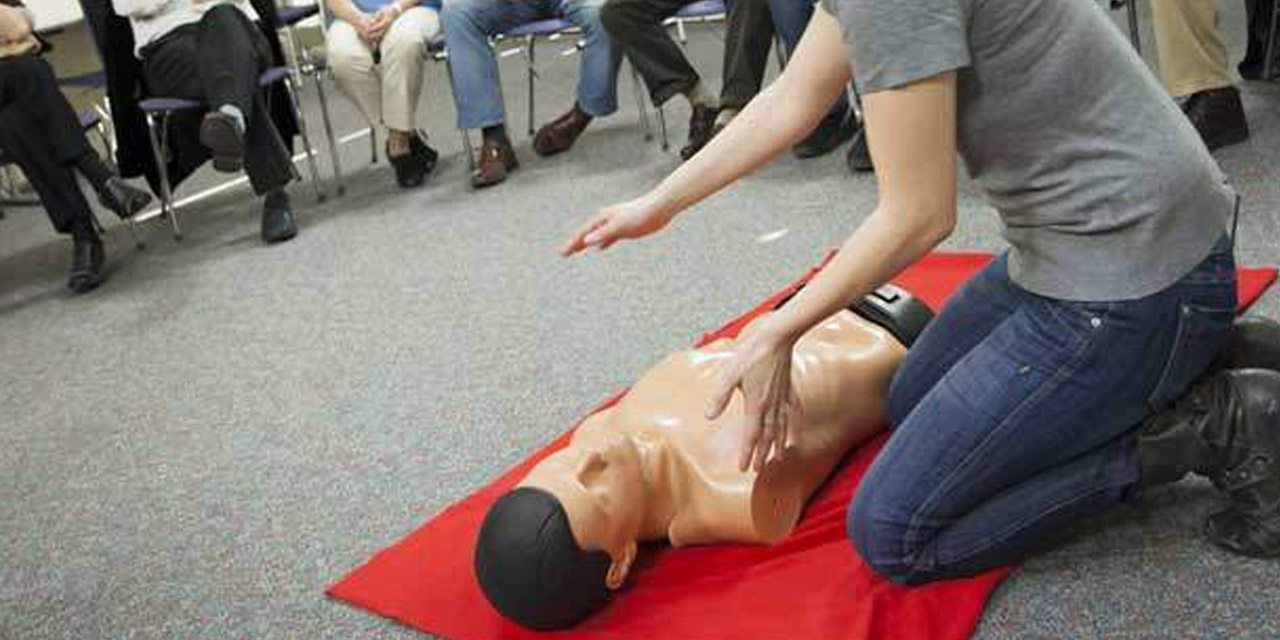
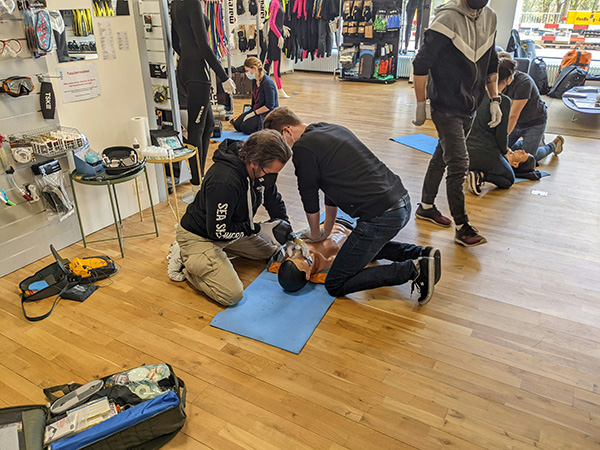
Paediatric first aid cannot be learned effectively through theory alone. First Aid especially requires a practical approach, and learners need to gain experience by completing the physical actions required of them within a controlled environment.
Learners take part in practical demonstrations, supervised skills practice and realistic scenarios so they can apply what they have learned to situations they may encounter at work.
Training includes opportunities to practise skills such as:
Managing an unresponsive casualty
Controlling serious bleeding
Responding to common paediatric emergencies
Using realistic workplace examples helps learners move beyond simply remembering procedures and develop the confidence to recognise a problem, decide what to do and act appropriately.
Tailored First Aid Training
The risks faced by a nursery are not necessarily the same as those faced by a primary school, specialist education setting, or holiday club. This is why some child first aid training courses aren’t appropriate for your organisation, even if they appear to be on the surface.
We customise our training course to suit your organisation, using examples and scenarios that reflect:
The ages of children you support
Common activities and foreseeable risks
Children with additional health or support needs
Your organisation's emergency procedures
This makes the learning more relevant and helps staff understand how paediatric first-aid principles apply in their own workplace.
Paediatric First Aid Course Assessment and Certification
Assessment takes place throughout the course and includes both practical competence and underpinning knowledge.
Learners are expected to demonstrate that they can apply essential paediatric first-aid techniques safely and effectively. Knowledge is also assessed through questioning and/or a multiple-choice assessment, according to the qualification requirements.
Practical assessment is particularly important because the EYFS criteria require an assessment of competence before a Paediatric First Aid certificate is awarded.
Learners who successfully complete the required training and assessments receive the appropriate Paediatric First Aid certification, valid for three years. This short duration is set in stone by the EYFS. If you need a refresher course, we also provide those.
Related Training for Schools and Childcare Providers
We also provide a range of courses that can be supplemental to Pediatric First Aid, equipping your team with further skills that are more relevant to your setting.
Depending on the children your organisation supports, related training may include:
Training can be planned as part of a wider programme based on the needs of your staff and the children they support.
How Long Does Paediatric First Aid Training Take?
The full course consists of a minimum of 12 hours of learning, excluding breaks.
This reflects the requirements for full Paediatric First Aid training within the EYFS framework in England.
Training can be scheduled to suit organisational requirements, subject to the requirements of the qualification and applicable regulatory standards.
Shorter Emergency Paediatric First Aid training delivered over 6 hours is also available.
Why Choose Guardian Angels Training?
Our approach is focused on more than simply completing a first-aid course. We want learners to understand what to do, why they are doing it, and how to respond confidently when faced with a real emergency.
Training combines:
Current evidence-based first-aid practice
Practical skills development
Realistic workplace scenarios
Training adapted to the needs of the organisation
Clear assessment of practical competence and knowledge
We can also advise organisations about complementary training where children have additional health or support needs.
Book Paediatric First Aid Training
If you need Paediatric First Aid training for a nursery, school, childcare provider or other organisation working with children, contact Guardian Angels Training to discuss your requirements.
We can help you identify the most appropriate course, delivery format and training programme for your team.